AI & Machine Learning · Case Study · AgriTechFeatured
Farmlink AI: Building an AI-Powered Agriculture Platform
4 min read
By Dipendra Kumare
156 views
Introduction
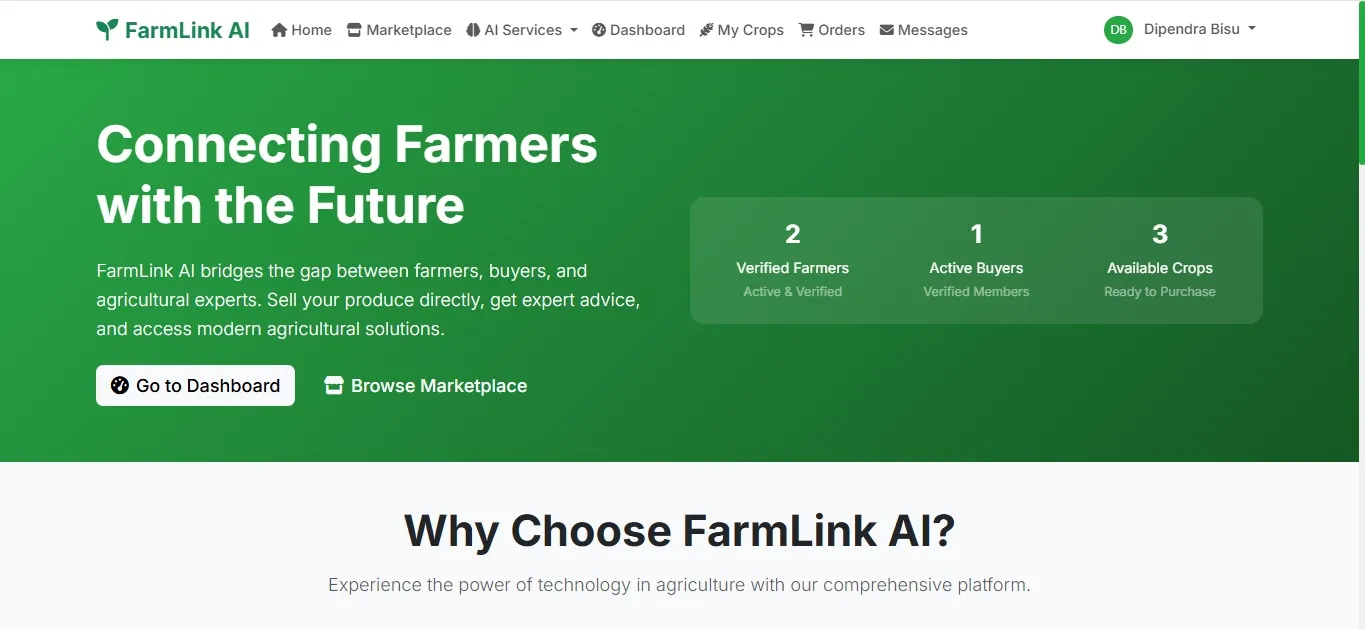
Farmlink AI is an AI-powered agriculture platform built using Flask, PostgreSQL, and Generative AI to provide smart crop recommendations, real-time weather insights, and intelligent farming advisory for data-driven decision making.

Farmlink AI was built to solve this problem by combining AI, data, and modern web technologies into a single intelligent platform that supports farmers in making better decisions.

This blog explains why Farmlink AI was built, how it works, the challenges faced, and what I learned while building it.
The Problem
Farmers commonly face these challenges:

• No instant access to expert agricultural advice

• Difficulty predicting crop diseases and weather impact

• Lack of data-driven crop and fertilizer recommendations

• No clear understanding of market trends and pricing

• Manual trial-and-error farming leading to losses

Most existing solutions are either:

• Too complex
• Not localized
• Not data-driven
• Or not accessible digitally
The Idea Behind Farmlink AI
The goal was to build a simple, intelligent, and reliable platform that farmers can use without technical knowledge.

Key objectives:

• Provide instant AI-based guidance

• Use real-time weather and data signals

• Support decision-making using ML & GenAI

• Keep the interface simple and mobile-friendly
Solution Overview
Farmlink AI is an AI-powered agriculture decision-support platform that offers:

• AI chatbot for farming queries

• Crop recommendation

• Weather-based advisory

• Disease prediction insights

• Market trend analysis

• Personalized farmer

The entire platform was developed end-to-end, including frontend, backend, AI logic, database, and deployment.
Technology Stack Used
Frontend :

• HTML, CSS, JavaScript
• Bootstrap for responsive UI

Backend :

• Python with Flask
• REST API architecture

Database :

•PostgreSQL (relational, structured, scalable)

AI & ML :

• Generative AI for natural language advisory
• Machine learning models for crop recommendations
• Data preprocessing & feature engineering

Integrations :

• Weather APIs
• External data sources for market insights
Some Key Features Explained
1. AI Agricultural Assistant :
A GenAI-powered chatbot that answers farming questions in natural language, such as:

• Crop selection
• Fertilizer usage
• Irrigation timing
• Disease prevention

2. Crop Recommendation System

Uses ML models to suggest suitable crops based on:

• Location
• Climate conditions
• Historical data

3. Weather-Based Advisory

Real-time weather data helps generate:

• Rain alerts
• Temperature warnings
• Climate-based farming suggestions

4. Farmer Dashboard

A centralized dashboard where farmers can:

• View AI suggestions
• Track past recommendations
• Monitor seasonal insights

5. Secure & Scalable Platform

• Flask-based backend with modular architecture
• PostgreSQL database with optimized queries
• Secure authentication and access control
Challenges Faced
🔹 AI Integration

Integrating GenAI responses with real-time data while keeping response time fast was challenging.

🔹 Data Quality

Agricultural data varies across regions. Cleaning and normalizing datasets was essential for reliable outputs.

🔹 Performance

AI models are resource-intensive. Optimizing API calls and response flow was necessary.

🔹 User Experience

Designing an interface that works well for non-technical farmers required multiple iterations.
Key Learnings
1. How to integrate AI models into real production applications

2. Building scalable Flask APIs with PostgreSQL

3. Designing AI systems for domain-specific use cases

4. Handling real-time APIs with backend services

5. Importance of data preprocessing in ML systems

6. Building simple UI for complex systems
Impact & Use Case
Farmlink AI helps farmers:

• Reduce guesswork
• Make informed decisions
• Improve crop yield
• Respond faster to weather and disease risks

The project demonstrates how AI can solve real-world problems when applied thoughtfully.
Conclusion
Farmlink AI is more than just a project—it is a real-world application of AI, full-stack development, and system design.
Building it strengthened my skills in Python, Flask, PostgreSQL, AI integration, and scalable system architecture.

This project reflects my approach to building practical, production-ready, and impact-driven software.
Share:
Related Posts

Full-Stack Development
In this blog, I share my experience of building a full-stack web application with authentication, backend security, and real-world best practices.
2 min read
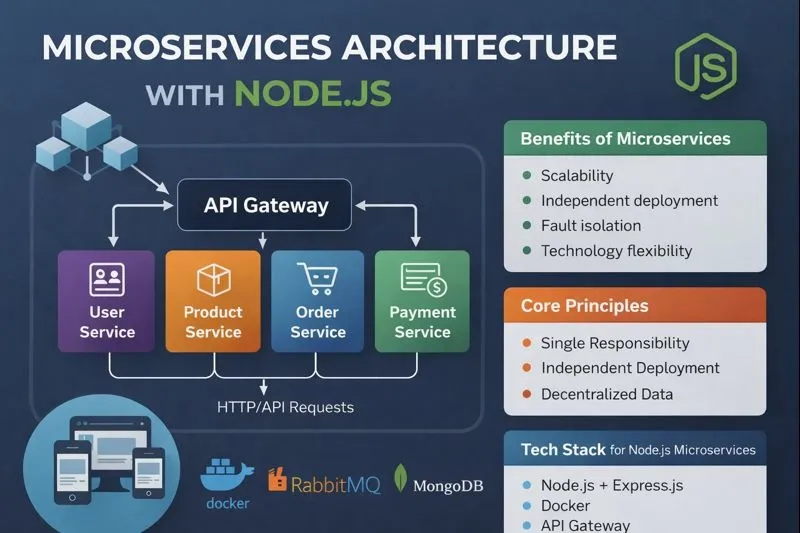
Design and implement scalable microservices using Node.js, Docker, and message queues. Real-world patterns and solutions.
3 min read